
Databases are at the heart of every modern application, storing and organizing the information that powers digital experiences. Choosing the right type of database affects performance, scalability, and long-term maintenance. Understanding the fundamentals of relational and non-relational databases helps developers make informed decisions rather than relying on trends.
These concepts are especially important for anyone building end-to-end applications or planning a career in web development. If you want to build a strong foundation in these areas, consider enrolling in a Full Stack Developer Course in Trivandrum at FITA Academy to gain practical exposure along with conceptual clarity.
What is a Relational Database
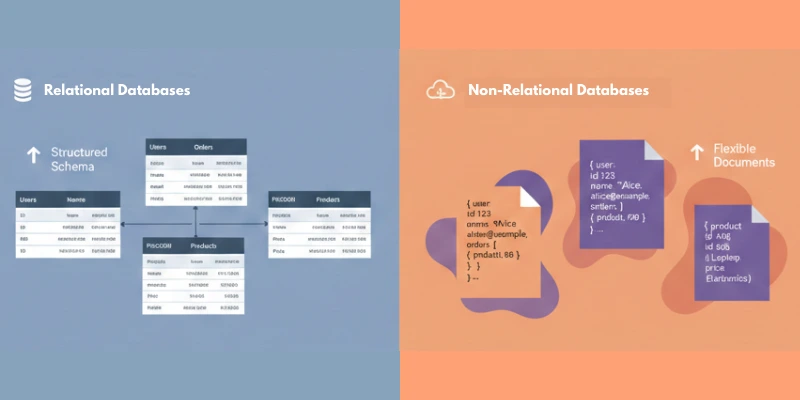
A relational database organizes data into structured tables with rows and columns. Each table represents a specific entity, and relationships between tables are defined using keys. This structure allows data to remain consistent and well organized across the system.
Relational databases rely on predefined schemas, meaning the structure must be planned before data is added. This approach works well when data relationships are clear and stable over time. Many traditional business applications prefer relational databases because they support reliable transactions and structured querying with predictable results.
Strengths of Relational Databases
A major advantage of relational databases is their ability to maintain data integrity. Rules such as primary keys and foreign keys ensure that relationships between data remain valid. They also support transactions that follow strict consistency rules, which is essential for applications like banking or inventory systems.
Relational databases make it easier to run complex queries across multiple tables while maintaining accuracy. For developers who enjoy structured thinking and clear data models, this approach offers stability and control in application design.
What is a Non-Relational Database
Non-relational databases store data in more flexible formats such as documents, key-value pairs, or graphs. They do not need a set structure, enabling data formats to evolve over time. This flexibility makes non relational databases suitable for applications that handle large volumes of varied data. They are often designed to scale horizontally, meaning they can handle growth by adding more servers. Developers working on dynamic applications often prefer this model because it adapts quickly to changing requirements.
Strengths of Non Relational Databases
Non-relational databases excel in performance and scalability for large-scale systems. They are capable of managing large volumes of data with reduced latency by spreading it across several machines. Their flexible structure allows teams to iterate faster without redesigning the entire database.
This makes them a strong choice for real time applications, content platforms, and analytics systems. If you are aiming to build scalable applications and want to master these concepts, you may consider taking a Full Stack Developer Course in Kochi to strengthen your practical understanding through hands-on projects.
Key Differences Between the Two
The core difference lies in structure and consistency. Relational databases prioritize structured data and strong consistency, while non relational databases prioritize flexibility and scalability. Relational systems work best when relationships are well defined and rarely change. Non relational systems perform better when data varies in format and grows rapidly. Choosing between them depends on application needs rather than which option is more popular.
Relational and non-relational databases both play critical roles in modern software development. Understanding when to use each helps developers design efficient and reliable systems. Instead of viewing them as competitors, it is better to see them as tools suited for different problems.
Building this decision making skill is a key step in becoming a confident developer. If you want to deepen your expertise and apply these fundamentals in real projects, signing up for a Full Stack Developer Course in Pune can refine your skills with guided learning and industry focused practice.
Also check: Responsive Design Patterns for Modern Web Apps